
Ancestral Baby-Led Weaning: Nutrient-Dense First Foods for Baby
This post contains affiliate links, meaning that I may make a small commission when you shop from my provided links. This helps me to grow my business, at no extra cost to you!
Nutrient-dense first foods
How I approached baby-led weaning.
When I first started researching baby-led weaning, I realized pretty quickly that most of the conversation around baby-led weaning first foods felt very disconnected from what babies are actually designed to thrive on. So much emphasis was placed on grains, fruits, vegetables, and snack foods, but not much on nutrient density or the incredible nutritional demands of infancy.
As a Nutritional Therapy Practitioner who values holistic nutrition, low-tox living, and nourishing real food, I wanted to better understand which foods best support a baby's rapid growth and development. As I kept learning, I kept coming back to breastmilk itself. It's naturally rich in fats, cholesterol, and bioavailable nutrients that support brain development and growth in the first year of life.
That shifted something for me. Instead of thinking in terms of "starter foods," I started thinking about nutrient-dense first foods that complement the nourishment babies are already receiving through breastmilk.
A lot of that shift was influenced by the work of the Weston A. Price Foundation, and traditional nutrition principles, which emphasize nutrient-dense animal foods, healthy fats, and foods that deeply support growth and development, especially in pregnancy and childhood.
That’s what led me toward a more ancestral approach to baby-led weaning. I wanted to prioritize foods like egg yolks, sardines, liver, bone broth, and healthy fats, rather than focusing primarily on fruit and vegetable-based first foods. Not because those foods don’t matter, but because early nutrition is doing so much heavy lifting developmentally.
In this post, I’m sharing the principles that shaped that shift for me, along with the first foods we’re focusing on in our home.
What Breast Milk Taught Me About First Foods
One of the biggest shifts in how I approached first foods came from simply looking more closely at breastmilk itself. Breastmilk is incredibly rich in fat, naturally contains cholesterol, and is uniquely designed to support rapid brain growth, nervous system development, and overall growth in the first year of life. It’s not a “light” or low-calorie food. It’s deeply nutrient-dense and highly tailored to what babies need during this stage.
That perspective really changed how I thought about introducing solids. It made me less focused on the idea of “first foods” as a separate category and more focused on foods that continue supporting the same nutritional priorities breastmilk already provides.
That’s also why I don’t personally center fruits and vegetables as the main foundation of first foods. They absolutely have value and a place in a child’s diet, but they aren’t typically the most nutrient-dense or developmentally critical foods in this early stage of infancy.
Instead, I prioritize foods that are rich in fats, minerals, protein, and highly bioavailable nutrition, foods that feel more aligned with what the body is already asking for during this season of rapid growth and development.
What Baby-Led Weaning Actually Is
Baby-led weaning is really a simple concept at its core: it’s an approach to introducing solids where babies are given the opportunity to self-feed real, whole foods from the beginning, rather than being spoon-fed purees as the primary method. It’s less about a strict set of rules and more about trusting baby’s natural developmental cues.
BLW is about feeding around baby’s readiness. This means letting them explore food at their own pace, learning textures, grasping with their hands, and gradually building the oral motor skills needed for chewing and swallowing. It turns mealtime into a developmental experience, not just a way to “get calories in.”
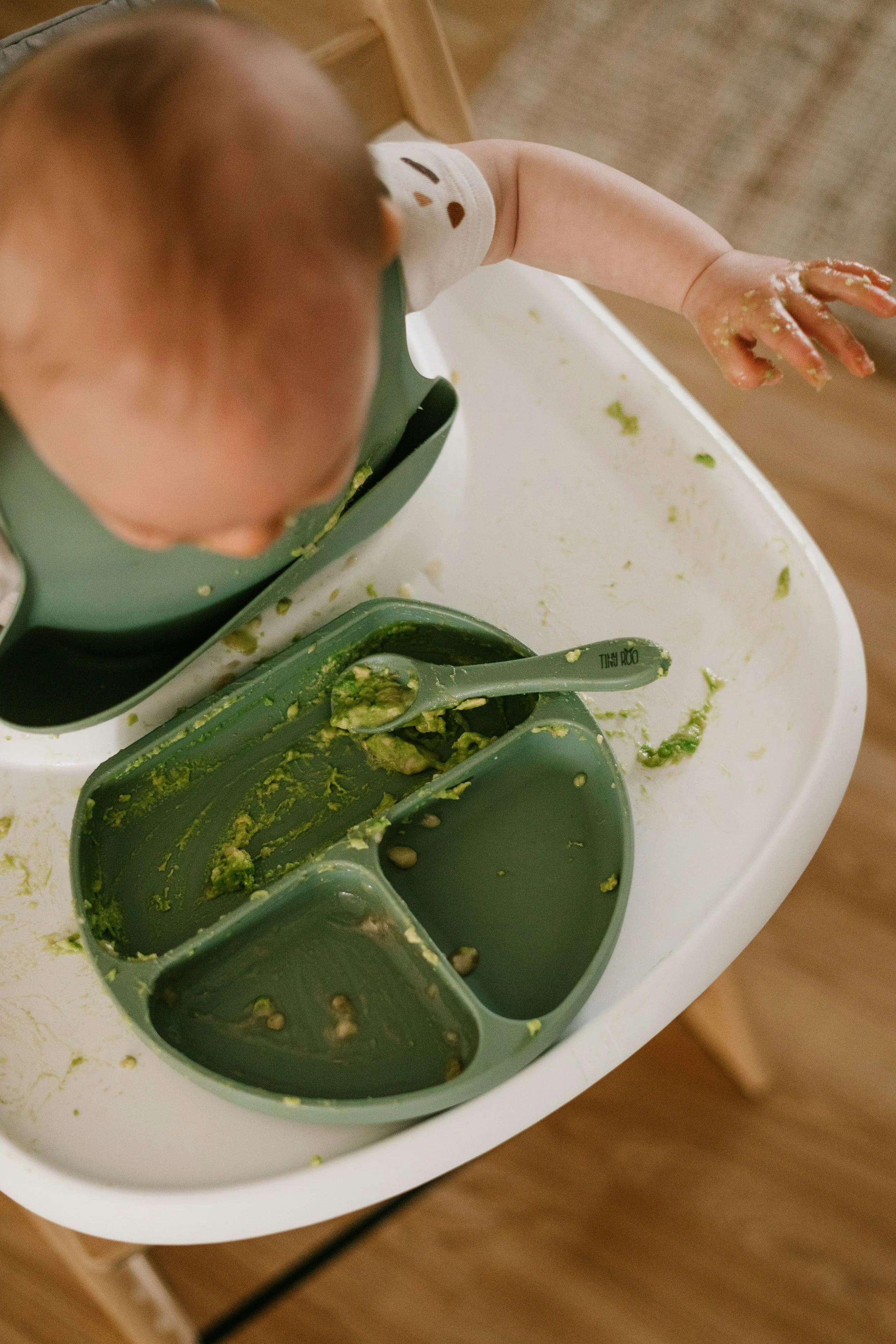
A big part of this is letting your baby make a mess when they eat. I’ll be honest, when we first started feeding my son, my husband and I almost felt like it was wrong to let him make such a big mess. He was squishing, smushing, smearing…. BUT because of that, we noticed that our son has continued to be open to trying any food we place in front of him.
Another thing I really love about baby-led weaning is that it doesn’t have to mean packaged baby snacks or specially made processed foods. In many cases, babies can safely eat modified versions of the same nourishing foods we’re already eating, as long as they are prepared in an age-appropriate way (soft enough, appropriately sized, and safe for their stage).
Signs Baby May Be Ready for Solids
Most babies show a combination of these readiness signs before starting solids:
Sitting independently with good head and neck control
Loss of the tongue thrust reflex (pushing food back out automatically)
Strong interest in food: watching, reaching, or leaning toward what you’re eating
Traditional Wisdom & Ancestral Nutrition
A big part of my perspective on first foods has been shaped by traditional food wisdom and the work of the Weston A. Price Foundation, which highlights how many cultures throughout history approached nourishment in a very different way than we do today, especially when it came to babies, children, and postpartum mothers.
Across many traditional societies, there was a clear emphasis on nutrient density during seasons of growth and recovery. Instead of separating “baby foods” from “adult foods,” families often focused on giving growing children some of the most nutrient-rich parts of the diet early on in life.
That often included foods like:
Organ meats, prized for their dense concentration of vitamins and minerals
Broth and slow-simmered stocks for minerals and gut-supportive compounds
Egg yolks as an easily digestible source of fat and nutrients
Animal fats like butter, tallow, and marrow for energy and brain development
Fermented foods for preservation, digestion, and microbial diversity
It’s clear that historically, the most nutrient-dense foods were often intentionally prioritized for those in the highest-demand stages of life.
That context became a grounding point for me as I thought about how I wanted to introduce foods in a way that felt aligned with both tradition and the nutritional needs of infancy.
Nutrient-Dense First Foods We’re Prioritizing
Rather than focusing on “typical” first foods, I’ve been choosing foods that are rich in the nutrients babies need most during this stage of rapid growth, especially fats, minerals, and highly bioavailable nutrition.
Egg Yolk
Egg yolks have been one of my favorite early foods because they’re so nutrient-dense and generally very well tolerated.
They’re rich in:
choline (important for brain development)
healthy fats
fat-soluble vitamins
For baby-led weaning, I like to serve them in simple, soft ways like:
soft scrambled in ghee
mashed yolk (that I usually add a generous scoop of butter or ghee to)
omelet strips cut into easy-to-grip pieces
Sardines
Sardines are a powerhouse first food, especially for brain and bone development.
They provide:
DHA and omega-3 fatty acids
calcium (especially if bones are included, which makes it an even more ideal first food if your child is dairy free)
a wide range of minerals
I usually serve them:
mashed with avocado
formed into soft patties or mixed into other ground meats
Liver
Liver is one of the most nutrient-dense foods we can offer, which is why I like to include it early and in small amounts.
It’s especially rich in:
iron
vitamin A
B vitamins
Since the flavor can be strong, I typically serve it:
As liver pate
Desiccated liver served in ground meat or sauces
Bone Broth or Meat Stock
Bone broth or meat stock has been a staple in our home for our baby and for us.
It’s valued for:
minerals in a highly absorbable form
collagen and gelatin
gut and digestive support
I use it as a base for soups or to soften other foods, and sometimes offer it in small amounts from an open cup or straw cup.
Whipped Bone Marrow
Whipped bone marrow is one of those deeply traditional foods that feels very aligned with ancestral nourishment.
It provides:
highly nourishing fats
concentrated energy for growth
a long history of traditional use in many cultures
I like to serve it:
spread thinly on soft strips of sourdough (if tolerated)
mixed into mashed vegetables or meats
my son loves it so much he’ll just eat a spoonful of it
Whipped Bone Marrow: The Ultimate Ancestral First Food for Baby
Butter or Ghee
Butter and ghee are simple but incredibly effective ways to increase nutrient density.
They offer:
fat-soluble vitamins
satiating, stable energy for growth
gentle flavor exposure to real foods
I often add them:
to vegetables
to scrambled eggs
or melted over soft foods
Avocado
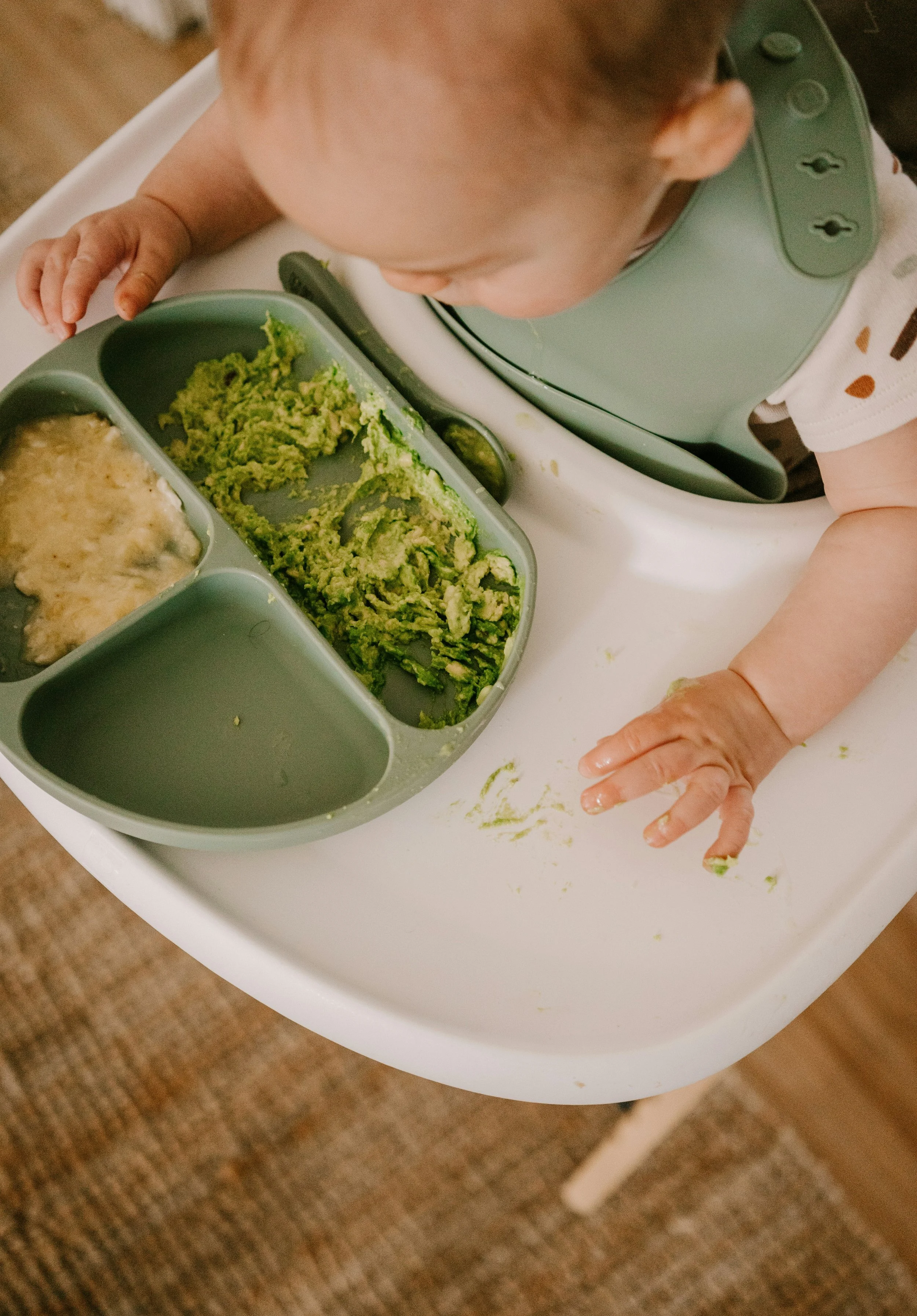
Avocado is one of the easiest first foods because of its texture and naturally creamy fat content.
It provides:
healthy monounsaturated fats
softness that’s easy for babies to manage
a simple entry point into self-feeding
I usually serve it:
sliced into strips
lightly mashed and pre-loaded onto a spoon
Sauerkraut
Fermented foods like sauerkraut are more about exposure and diversity than volume at this stage.
They offer:
beneficial fermentation compounds
early flavor exposure
support for microbial diversity (in small amounts)
For babies, I only offer:
tiny tastes or very small amounts alongside other foods
Coconut Yogurt
Coconut yogurt is a nice dairy-free option that still feels creamy and ha great probiotic benefits.
It can provide:
fat content for energy
potential probiotic benefits (depending on brand, but our favorite is Cocojune)
a smooth texture that’s easy to eat
I keep it simple and unsweetened, and use it occasionally as part of a balanced meal.
Cod Liver Oil
Cod liver oil is very nutrient dense, but always make sure to be intentional about how you’re adding it.
It contains:
vitamins A and D
omega-3 fatty acids
Quality really matters here, so I focus on sourcing carefully and using it thoughtfully rather than making it a daily “default.” My most trusted CLO is from Rosita.
Favorite Books for Baby Led Weaning
A lot of what shaped my approach to first foods came from stepping outside of mainstream baby nutrition advice and learning from traditional food wisdom and nutrient-dense, whole food frameworks.
Nourishing Traditions
This book was one of the first introductions I had to traditional food preparation and the idea that nutrient density and preparation methods really matter. It reframed how I think about fats, broth, organ meats, and fermentation in everyday nutrition.The Nourishing Traditions Book of Baby & Child Care
This felt like a natural extension into childhood nutrition, and it reinforced the idea that babies and children benefit deeply from nutrient-dense animal foods, healthy fats, and traditional preparation methods rather than overly processed “kid foods.”Super Nutrition for Babies
This book helped bridge the gap between ancestral nutrition and practical modern feeding. I appreciated how it focused on nutrient density in a very straightforward, usable way for families.Baby-Led Weaning
This was helpful in understanding the foundational principles of self-feeding, honoring baby’s developmental readiness, and allowing babies to explore real food textures safely and confidently.Real Food for Pregnancy
While not specifically about babies, this book deeply influenced my understanding of nutrient needs during reproduction, pregnancy, and postpartum—which naturally extends into how I think about nourishing infants as well.
A Final Thought on First Foods
For me, baby led weaning became about recognizing that babies have incredible nutritional needs during this stage of rapid growth and choosing foods that support those needs as best I can. It's about prioritizing nutrient density, offering a variety of whole foods, and trusting that small, consistent choices add up over time.
I also think it's important to remember that food is about more than nutrients. Mealtimes are an opportunity for connection, exploration, and learning. Babies are developing their relationship with food, learning new textures and flavors, and participating in family meals for the very first time.
Whether your first foods look exactly like ours or completely different, my hope is that this post encourages you to think beyond what's traditionally marketed as "baby food" and consider the incredible nourishment that real, whole foods can provide.
